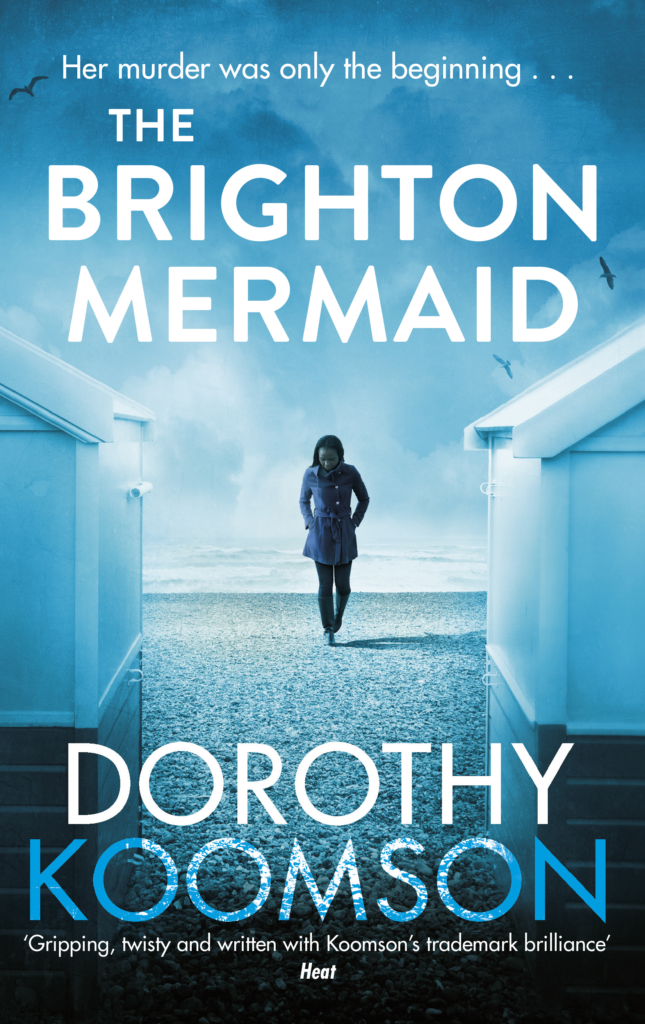
Hurrah! Read an extended extract of my 14th novel. Click on the image above or here on THE BRIGHTON MERMAID.
And this video is of me reading an extract from The Brighton Mermaid.
Dorothy Koomson reads from The Brighton Mermaid
Dorothy Koomson reads from The Brighton Mermaid
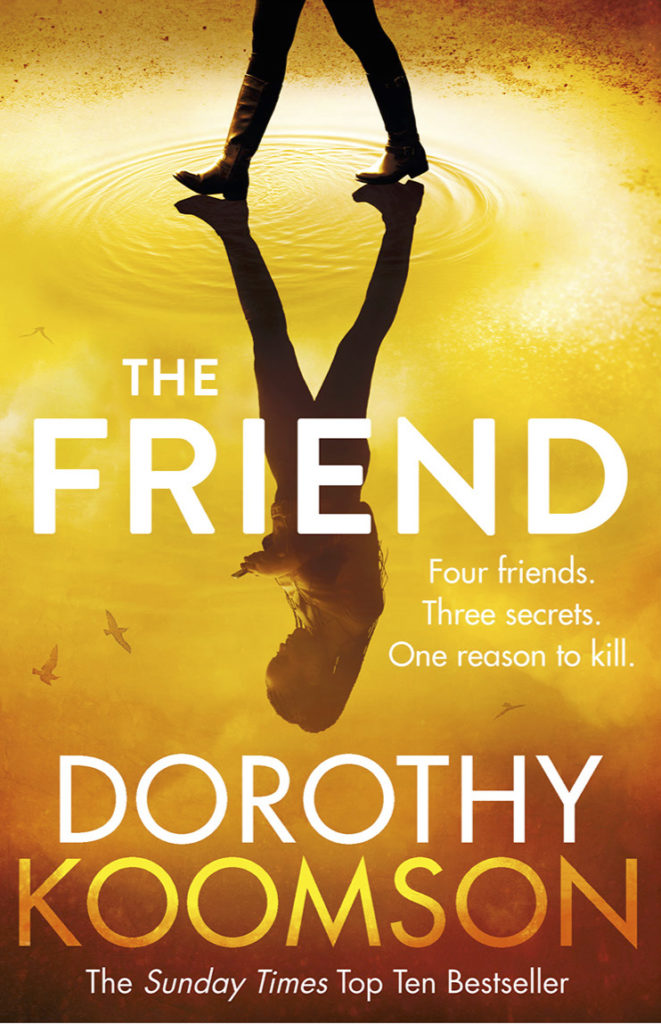

It’s here! The first read of The Friend. Click on the image above or on THE FRIEND EXTRACT to read the first few pages of my 12th novel.
If you want to read more, you can sign up for my booky letter at: By Your Shelf and you’ll be emailed the passcode so you can read an extra 20 pages.
Don’t forget, you can order The Friend here: ORDER THE FRIEND.

I am a huge supporter of their work and how they aim to help to lower and eventually eradicate the high levels of illiteracy in this country.
It’s only when you hear the patrons of the charity talk that you’re reminded how so many people don’t have access to books – especially with what has been happening to libraries in recent years. But you know my feelings on that.

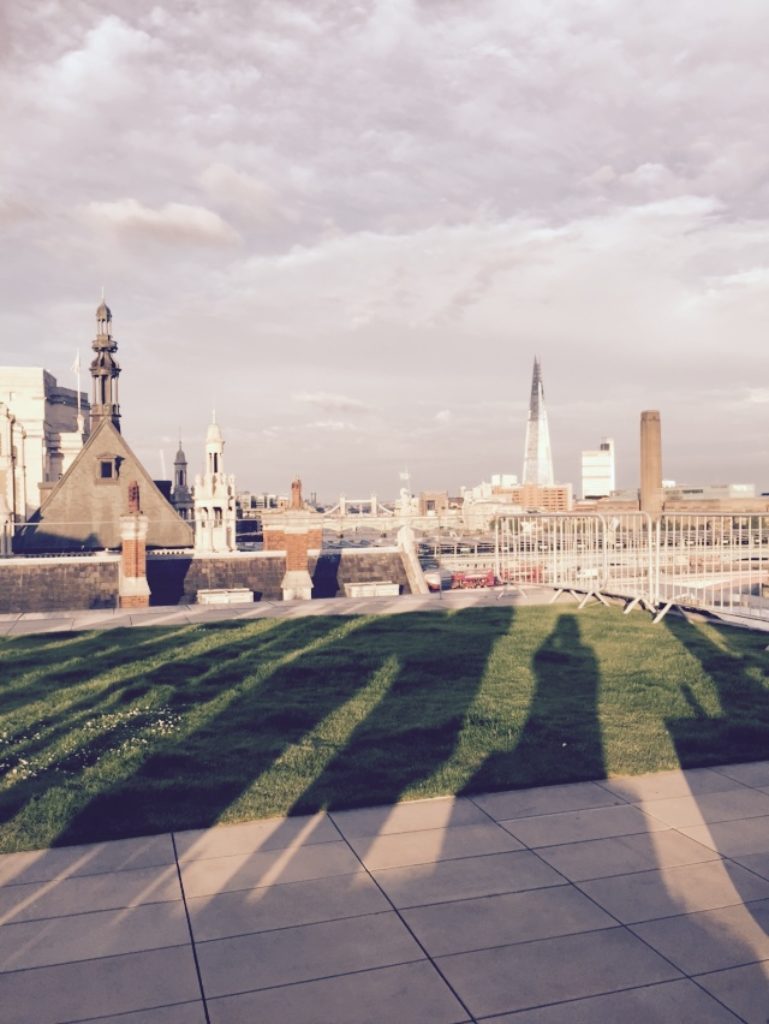
At the event, held in London at the Hatchette building with amazing views of London, I had one of those moments. You know, one of those moments, when you look across the room and spot Malorie Blackman and your heart stops because you’re looking at one of your writing heros. And she’s talking to another author you admire – Chris Riddell – and you realise that this is one of those few moments when you can go and make a total show of yourself in front of them and NOT ACTUALLY CARE.
So that’s what I did. I told them I was in awe of them. And Malorie said she’d read my books (swoon) and Chris said we should meet for coffee because he lives in Brighton (swoon again) and I sort of do, too. And I wished that I wasn’t on a self-imposed social media break because I so wanted to tell the world. I settled for telling my husband who was more impressed than I was, if that was possible. (And didn’t even mind me waking him up to tell him about it.)
Do have a look at the work the National Literacy Trust do if you get the chance. They are doing some brilliant stuff and they could always use people to help out. For example, you could host a Tales and Teapots party to raise funds for the National Literacy Trust. Me, I’m so counting down the days until it’s acceptable to hit Mr Riddle up for that coffee by the sea…
Keep checking back here for news of my new events. And don’t forget to sign up for my newsletter to be kept up to date on the new stuff I’m up to.
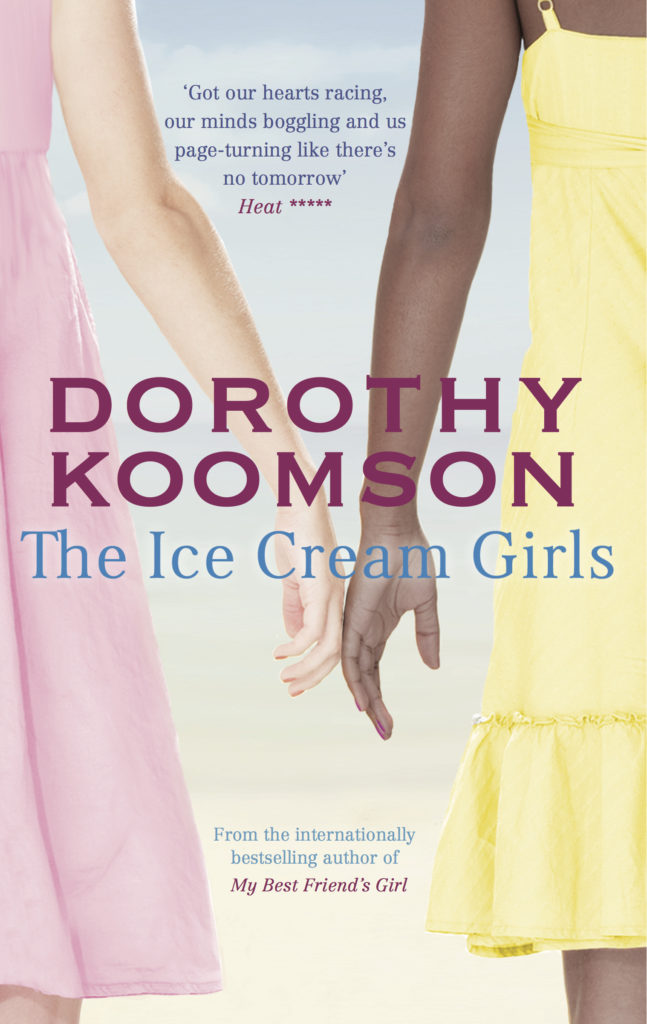
With The Ice Cream Girls, I have had numerous emails from people all over the world telling me how the book changed their lives or the life of someone they know. Such as the 60-year-old woman who said the book reflected her experiences in a way that she had never been able to share. Such as the domestic violence perpetrators outreach worker who said the novel had shown a man in her class that he was an abuser and that his wife had been right to leave him. Such as the woman who, after reading the story, finally plucked up the courage to see her relationship for what it was and to leave. Those are just three examples from all the powerful emails I’ve had.
When I write a book I feel an enormous sense of responsibility to tell accurately and sensitively the stories of the people I speak to, which is why those emails bring tears to my eyes: not only has something I have written touched someone, but I have managed to accurately portray the realities of people’s lives.
I have to admit, when I first started researching for The Ice Cream Girls I didn’t know or understand that all abusive relationships are rooted in emotional manipulation – I thought it was all about the physical violence. I found out that without the psychological control, the violence wouldn’t happen more than once. Having learnt this, I told the story of The Ice Cream Girls knowing that anyone, including ‘nice’, ‘ordinary’, ‘normal’ girls from two-parent families can and do find themselves manoeuvred into the situation that Poppy and Serena were in.
The TV drama that is based on my novel doesn’t seem to agree with what I learnt from my research and it seems to fall into the trap of regurgitating the stereotypes believed by those who have no experience or knowledge of domestic violence. While watching the drama I couldn’t help thinking that, while the people who made it had liked the basic idea of my book, they decided that abusive relationships and girls being groomed into sexual relationships by older men simply didn’t happen in the way I had written about them.
After the second time I outlined my concerns over the potentially damaging messages in the TV drama, the show’s executive producer admitted that their drama ‘tells a slightly different story with slightly different characters and different motivations’. Which is true, there are two versions of the story called The Ice Cream Girls: both have protagonists called Serena and Poppy, both have Poppy and Serena accused of killing an abusive man called Marcus.
The Serena I created was a shy, clever-but-naïve young girl manipulated into a relationship by her teacher who then went on to brutalise her; the Poppy I wrote about was a young girl, close to her father who thought the older man she was involved with loved her even when he abused her. My Ice Cream Girls were trapped in a nightmare situation not of their making and they couldn’t work out how to escape.
My Ice Cream Girls, as many people from all over the world have told me, were loveable, likeable and deeply sympathetic to the point where readers were torn about who they thought had murdered Marcus.
So, essentially, there are two versions of the story called The Ice Cream Girls – the research-based novel that I wrote and the TV version.
I’m sure a lot of people enjoyed the TV version – the actors did a great job with the material they were given. But I hope the viewers questioned whether those situations play out in real life as they did in the TV drama, and that they consider how very different my book, the original story, might be to that version.
A further difference between the two is that the TV version had a different ending and a different killer. For those asking: I didn’t have any say or input into any of the changes including the ending.


It basically tells the story of what the main character Clemency ‘Smitty’ Smittson’s life was like there in Leeds and how she ends up here in Brighton, where most of the present-day story is set.
I really hope you enjoy the short story and that it inspires you to buy the book to read Clemency’s whole story. Let me know what you think of the story on email, Twitter, Facebook, etc.
You can read the short story by clicking here: FromThereToHere and you can buy That Girl From Nowhere from all good bookshops and online at these various places.


I’m a supporter of the National Literacy Trust and their aim to encourage and inspire people, especially children, to read, so I was really excited to be selected as one of the judges of the campaign.
As the National Literacy Trust says: ‘Anyone can be a Hero. A young person or adult who’s overcome challenges; an author who’s inspired people to read; a teacher or librarian; a volunteer in your local community; or even a celebrity.’ The group of celebrity judges included Cressida Cowell, the author of the bestselling How to Train Your Dragon series, columnist and author Lucy Mangan, and business entrepreneur Levi Roots. We were asked, in our choices, to consider:
1. The impact and contribution a nominated Literacy Hero has made to the literacy or reading lives of others and/or themselves. 2. How a Literacy Hero’s contribution reflects the overall aims of the National Literacy Trust in promoting literacy and reading to as many people as possible and in supporting literacy as an essential tool for life. 3. The creativity and resourcefulness of the nominee, and personal challenges that they may have had to overcome.
Click here to find out who the literacy heroes in the picture above are and why they won.
Photo credit: National Literacy Trust website

I have several people I could nominate as my literacy hero, but the one I’m going to choose for now is Oprah Winfrey. I’ve long admired her for the way she has brought several important issues to the forefront of people’s consciousness, but it was what she did globally for reading that has established her as one of my enduring literacy heroes. When she began her television book club in 1996, selecting a book to read every month with her viewers and then discussing it on the show, she helped to transform reading across the world. Many people in lots of different countries were inspired to start their own public and personal book clubs realising that all they needed to do so was a good book and people to talk about it with. Reading is one of the best things to do and anyone who makes it accessible, desirable and most importantly, possible for other people, is a hero to me.


I’d being thinking a lot about babies being left in cardboard boxes on the steps of churches and hospitals from my search for the story which centred a lot around adoption and children’s homes. After talking at cross purposes for a while, my husband explained to me about the Finnish baby boxes, where the Finnish government provides every new mother-to-be with a box full of baby essentials (clothes, toys, books, nappies, etc). The box also comes with a mattress so that the baby can sleep in the box for the first few weeks of their life.
The practice for giving these baby boxes originated in the 1930s for low income households as a way for them to be able to provide everything they need for their children and in 1949 it was extended to all Finnish families. My husband had mentioned that young Finnish women who lived abroad were asking their mothers to send them similar boxes, and that this story was a popular read because then the Finnish government sent a baby box to the young royals Kate and William for their first child.
This story came at a perfect time for me because I’d been searching for a way to link the main character of That Girl From Nowhere, Clemency AKA Smitty, with her birth mother. I wanted an unusual way for someone who had no knowledge at all of their birth family to have an everyday connection with her birth mother. There was the option of the birth mother having left jewellery (Clemency is a jewellery maker) for her to be given on her 18th birthday, but I wanted something that was always there throughout Clemency’s life.
I’ve mentioned before that the original incarnation of That Girl From Nowhere was a book called Where I Found You. That story was centred a lot around Clemency’s obsession with butterflies – she had recurring dreams about them and was obsessed with pictures of them in every-day life. When I had the conversation with my husband about the Finnish baby boxes, another piece in the puzzle that was creating the character and background of Clemency fell into place: I decided that her birth mother had known a Finnish woman who told her about the baby box tradition and so she decided to create a box for her baby and decorate it in butterflies. This box is quite important to Clemency, who keeps her most precious photographs in the box throughout her life, and when she finally meets a Finnish person who seems as obsessed with butterflies as Clemency she realises she has accidentally stumbled across the person who knows all about the butterfly box she used to sleep in and what happened to her birth family.

I kept this butterfly box (above) around while I was writing the book as a reminder of the story. The butterfly box in the story looks nothing like this box, of course. As Clemency describes it in the book: ‘All the butterflies on the box are hand-drawn and hand-coloured. The largest is on the bottom – its wingspan covers the entire surface, and the wings are mirror images of each other. Each colour is perfectly twinned; each intricate vein etched in black and reflected on the other wing. It must have taken her hours to do each wing, let alone the rest of them, each a different size, everyon a unique, beautiful winged creature that looked fragile and lifelike.’
These boxes look nothing like Clemency’s box, but I saw it in a shop while I was looking for something else and I liked it so much I bought it. I then went back and bought another one when something else happened in the plot to necessitate another butterfly box. (You’ll see what I mean if you read the book.)
When I’m writing, I find it helps to have visual reminders around – what I’m writing about may not be exactly the same but it is a trigger of what I can see in my mind when I’m writing the book. I really loved writing That Girl From Nowhere, and finding out about the baby boxes was a huge part of that.
If you want to find out more about the Finnish baby boxes, have a read here.
If you want to read That Girl From Nowhere, you can read an extract, here and you can buy it here, here and hereonline.


It’s the only way she can start to move on after her husband’s murder and to handle the new devastation that has arrived in her life. One of the first recipes she successfully tries is this one – Blueberry, Coconut & White Chocolate Chip Muffins. I was as surprised as Saffron is by how well the flavours work together!
100g desiccated coconut
200g plain flour
1 tablespoon baking powder
0.5 teaspoon salt
80g caster sugar
70g white chocolate chips
1 egg
60g butter
250ml milk
150g fresh blueberries
1 tablespoon plain flour to coat blueberries
12 large muffins or 6 large muffins and 6 heart-shaped muffins


It’s 3.30 a.m. on a dark October morning and I’m wide awake because I’ve just finished writing my next book – The Ice Cream Girls – and my body clock is out of synch with . . . pretty much everything. I have a few months’ worth of taped programmes to catch up, a pile of admin that will probably bury me if it topples over and a suspicion that all the things I promised to do ‘once I’ve finished the book’ will require my immediate attention.
But, I love this about my life. I love writing and everything that has to fit around it. And, since I really should try to get some sleep/reorder my flat/revert to normal eating habits/get my ‘normal’ life back, I thought I’d remind myself and you all about where my writing career started, by reproducing below the new introduction to The Cupid Effect .
The Cupid Effect was my first novel to be published and it recently received a revamp with a new cover, which is why I wrote a new introduction to it, explaining why it is so special to me. Hope you enjoy reading this little love note to The Cupid Effect , and I’ll see you next time when my life will be a little more ordered-ish!
The Cupid Effect: Where It All Started Every time I go into a shop that sells books, I always check to see if they have any of my novels. Even now, over half a decade after my first book was published, I still feel a thrill to see my name ‘in lights’; experience a glow of pride to see my words on a shelf.
I must admit I get an extra thrill whenever I see The Cupid Effect . I love all my books equally, it’s just (to loosely paraphrase George Orwell) I love Cupid a fraction more equally than the others.
Cupid may not be the novel that put my writing in front of a worldwide audience, but I will always have a special affection for it for many reasons. One reason is that I share certain similarities with the main character. I’m always at pains to point out that I am not my main players, but if I was forced to name a character I share most traits with, it’d be Cupid’s Ceri D’Altroy. She and I are both sci-fi geeks who are obsessed with the same TV show; we’ve both taught psychology; and we both have a large number of long-sleeved tops in are sartorial repertoire. Probably most crucially, we both have a habit of listening to people’s problems then giving advice we really wish said advisees wouldn’t take.
Another reason for my big love for Cupid is that it makes me laugh. It has its serious moments, but there are many, many scenes and phrases that tickle me enough to make me LOL (as the kids say). I laugh mainly because I can remember what inspired that particular scene or phrase.
My love of Cupid is that bit deeper, though, because it is my first born. The novel that allowed me to drop the first two letters of ‘unpublished’ and brand myself a published novelist. That day in February 2003 when I walked into a London bookshop and saw my name emblazoned upon the cover of a book is a day that permanently changed my life. It represented the culmination of months of writing every second I wasn’t earning money to pay my bills. It represented years of reading, writing and dreaming. It represented everything I’ve wanted since I was 13 years old and wrote my first full-length story. It represented me daring to follow my heart.
Cupid is essentially a book about having the courage to follow your heart and accepting that the power to change your life is in your hands. Not necessarily quitting your safe job and trying to do something you’re not sure you’re qualified for, like Ceri does, it is more about seeing what you would like to alter and striving to effect that change. Even if it is just a case of changing how you view your current circumstance.
As I said, I am proud of every single one of my books, and I love seeing them on the shelves of shops, so I’m especially excited that I’ll be seeing The Cupid Effect , ‘out there’ again, with a brand new cover: it’ll be showing me and the world where I started and how far I’ve come.
I hope you enjoy reading it as much as I enjoyed writing it.
© Dorothy Koomson 2009